
Therapy for Mothers:
Support for Every Stage of Motherhood
Motherhood changes everything.
It brings us to the edge and asks us for more. Just when we begin to find our footing, it asks something new.
It’s intense, demanding, joyful, hilarious, rage-inducing, mundane, and profoundly beautiful. In all of its challenges, motherhood offers a unique opportunity to bring us into deeper relationship with ourselves.
It reveals our fears, wounds, longings, and capacity for love. It asks us to confront the parts of ourselves shaped by our own histories, relationships, and experiences of being cared for.
Therapy offers a place to make sense of the experiences of motherhood. To tend to the places that hurt, explore the historical patterns that shape how you relate to yourself and others, and create more space for who you are continually becoming.
Together, we work toward a way of mothering that allows you to care deeply for your family without losing your relationship with yourself.
I offer virtual therapy to mothers throughout California and in-person therapy for mothers in the Bay Area. My work supports women navigating the many transitions of motherhood—from the acute moment of postpartum through the evolving challenges of raising children.
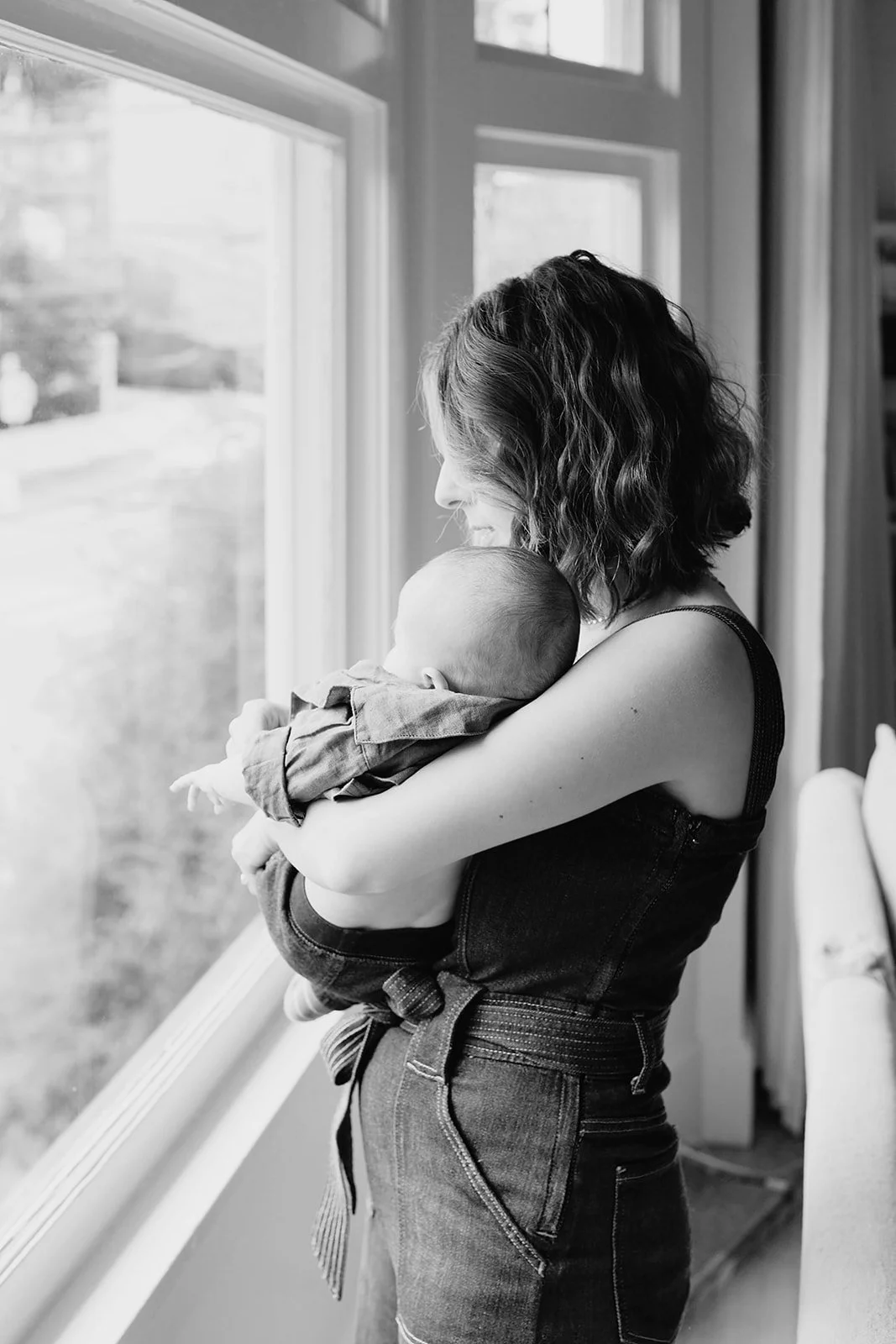
Therapy For New Moms
The demands on a new mom and partnership are beyond what anyone can anticipate during pregnancy.
For many women, the postpartum period brings experiences of anxiety, grief, inadequacy, panic, rage, loneliness, or a frightening sense of feeling trapped inside a life they deeply wanted. The perinatal period requires specialized knowledge to help mothers understand what’s happening for them. It is common for mothers in this time to experience:
Relationship challenges in the postpartum adjustment
Anxiety about being away from baby
Intrusive thoughts about safety or wellness of the child
Difficulty bonding with baby or wanting to create distance
Deep sadness, overwhelm, or doubts about our ability to mother
Difficulty eating or sleeping when there is an opportunity to do so
Challenges of returning to work
I bring my own experience becoming a mother, meditation & mindfulness practitioner, as well as advanced specialized training through Postpartum Support International’s Perinatal Mental Health Certification (PMH-C) program.
As children move from through toddlerhood and early adolescence, the challenges of motherhood become increasingly complex. We begin navigating questions of control, perfectionism, guilt, responsibility, boundaries, and co-parenting. We are asked to care deeply while also learning when to step back, tolerate discomfort, and trust our children’s development.
Our children also have a remarkable way of bringing us back to unfinished places within ourselves. In the process of mothering in this time, we inevitably bump into old wounds we never fully resolved, inviting us into lessons we thought we fully learned. What feels like frustration, worry, or conflict with our children is often intertwined with our own history.
Therapy offers a place to understand these patterns with compassion and curiosity. Together, we explore how your experiences, values, and history shape the way you show up as a mother, allowing you the space and understanding to respond with more grace—for yourself and your children.
Alongside my work with mothers, I bring experience working with children and families in an elementary school setting as well as in my private practice. This perspective allows us to consider both your experience as a mother and the developmental world of your child.

Therapy for Mothers of Young Children
Therapy for Mothers of Teens & Adolescence
The work of motherhood gets more complex as children grow older. One of its greatest challenges is learning to remain deeply connected while gradually relinquishing control.
Adolescence is, by design, a process of separation. Children begin to orient toward peers, experiment with identity, question limits, and discover who they are apart from their parents. This developmental movement is necessary, but it can stir profound feelings of grief, fear, uncertainty, and loss.
This stage asks something different of us as mothers. It invites us to examine our own experiences of growing up, separating, finding our voices, and learning what it means to trust ourselves and others. The questions our teenagers are living often become questions for us as well.
Therapy offers a place to grieve the loss of childhood while making space for the relationship that is emerging. Together, we explore how to stay emotionally available without over-functioning, how to tolerate uncertainty, and how to cultivate a relationship that grows alongside the person your child is becoming.